
From Evidence to Action: ADG 2.0 and The Next Era of Health-Centered, Equitable Design

Insights from the Center for Active Design Experts
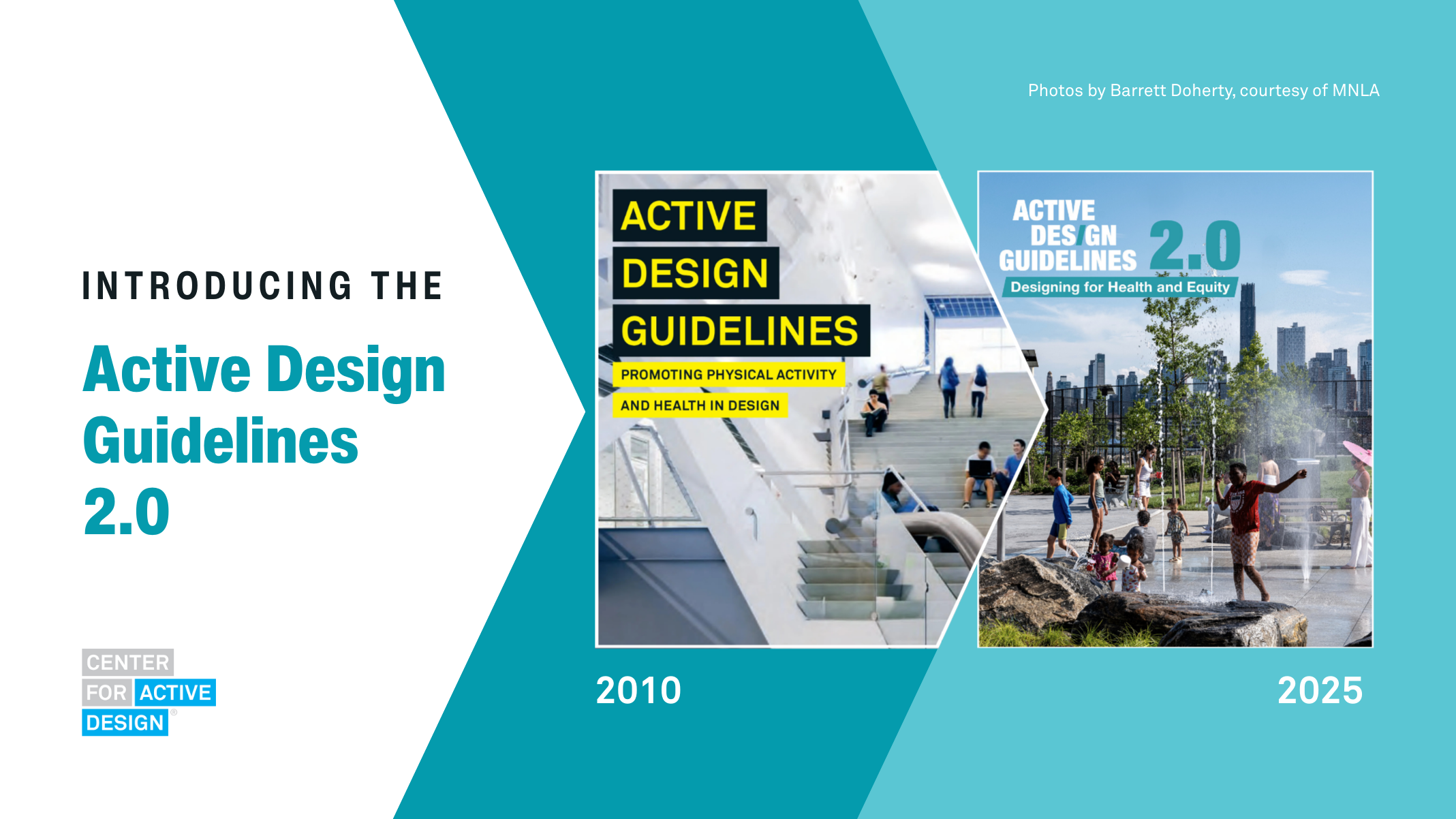
The Center for Active Design is proud to celebrate the release of Active Design Guidelines 2.0: Designing for Health and Equity (ADG 2.0), published by the City of New York. As a key collaborator with the New York City Department of Health and Mental Hygiene on this playbook, we’re honored to support the launch of this vital resource, reimagined for today’s challenges and opportunities and grounded in the latest research linking the built environment to public health.
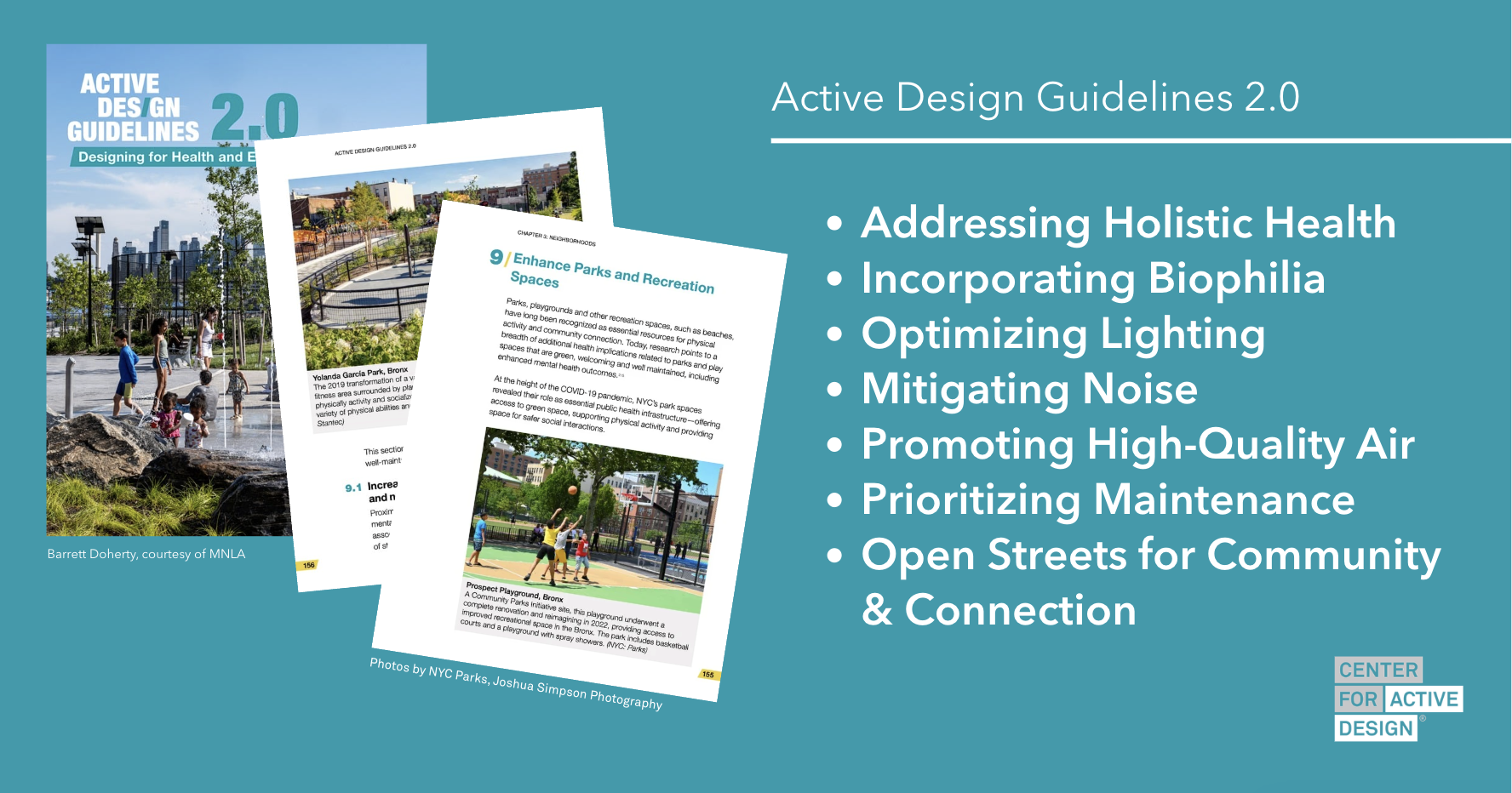
To celebrate the release of ADG 2.0, we’re sharing some of our favorite highlights – from inspiring real-world projects to actionable strategies that advance physical, mental, and social well-being across communities.
Addressing Holistic Health. The original Active Design Guidelines set the groundwork for translating public health evidence into built environment solutions, focusing primarily on promoting physical activity. This updated version reflects an expanded definition of health which focuses on physical, mental, and social well being as well as safety and civic life. Some of the most notable new guidelines and tactics focus on the following areas:
Incorporating Biophilia: ADG 2.0 highlights the role that biophilic design elements, like views of nature, natural materials, greenery, access to daylight and nature, play in reducing stress and negative feelings, and increased concentration.
Optimizing Lighting: Evidence shows that exposure to natural daylight can help regulate circadian rhythms, improving sleep quality and perceived quality of life, while poor sleep quality has been associated with obesity and depression.
Mitigating Noise: Particularly in urban settings, noise pollution can contribute to chronic heart conditions and depressive systems, and within buildings it can contribute to poor sleep and increased stress and anxiety. Design tactics from sealing and soundproofing to orienting furniture and plantings can help buffer unwanted noise and support occupant health.
Promoting High-Quality Air: High quality indoor air can support reduced rates of infectious disease and improved respiratory health, and these tactics become even more vital in the midst of a pandemic or in the face of increasing frequency of wildfires.
Prioritizing Maintenance: While well-designed spaces provide opportunities for health, these investments should always account for long-term maintenance and operations considerations. Research shows that people are more likely to use public spaces that feel safe and are well-maintained, and that signs of disorder– including vandalism, litter, and crime– are associated with diminished civic trust.
Open Streets for Community and Connection: In addition to the value of high quality indoor air, the COVID-19 pandemic also taught us the value of open spaces for fostering connection and community. Beyond parks and recreational spaces, expanding and extending the Open Streets initiative–explored in ADG 2.0–illustrates how access to outdoor spaces can strengthen social ties, combat loneliness, and advance social health.
Expanding the Conversation
ADG 2.0 introduces a number of new features–excerpts highlighting unique projects, collaborations, approaches, or issues that bring the guidelines to life. These features offer insight into innovative methods and key considerations for stakeholders designing with health in mind.
Prioritizing Community Collaboration: A new section to this edition is a chapter titled Community Collaboration, featuring practical strategies for planners, designers, developers, and other stakeholders to engage with communities throughout project development. The key principles, which surround building trust and transparency, amplifying community leadership, compensating participating community members, diversifying engagement opportunities, and evaluating and refining approaches, are aimed at fostering meaningful partnerships that ensure local voices are heard and local needs are met. While stakeholder engagement already plays a role in both public and private project development, these guidelines provide a framework for making that engagement truly impactful.
Addressing Some of Today’s Most Pressing Issues.
“For New Yorkers, one’s ZIP code can be a better predictor of health outcomes than genetic code.” - ADG 2.0
In NYC there is up to a 14-year age gap in average life span across neighborhoods, linked to a legacy of disinvestment which has limited access to resources for those living in certain areas. ADG 2.0 highlights the role policymakers, planners, and developers can play by prioritizing health equity in their practices and engaging in robust community collaboration.
ADG 2.0 also addresses the role that climate change has on public health, and how the built environment can support resilience from extreme heat, flooding, and air pollution. This excerpt highlights how climate consequences are connected to aggravation of chronic conditions, as well as the range of tactics, from shading to the installation of permeable pavement, can help to support resilient environments and populations.
Offering Inspiration.
ADG 2.0 highlights “Guidelines in Action” feature stories that showcase real projects that exemplify tactics found throughout community collaboration, building design, and neighborhood design sections. Here are three standout examples:
High Line Teens: This community collaboration project transformed a redevelopment that displaced many residents into an opportunity for local teens - creating jobs,skill-building, and civic engagement opportunities to ensure the community stayed connected.
The Bronx Night Market: A monthly open-air festival in Fordham Plaza that elevates community leadership and transforms public space into a hub of connection. Through art, vendors, and food, the market builds social cohesion, trust, and neighborhood pride.
Greenpoint Library: Completed in 2020, this library and Environmental Education Center was designed to respond to the Greenpoint Exxon oil spill—one of the largest in U.S. history. Built to the highest sustainability standards and with biophilic design at its core, it demonstrates how design can rebuild community trust and support local activism.
This release marks 15 years since the debut of the original Active Design Guidelines in 2010—a landmark document that reshaped how designers, planners, and policymakers think about the link between the built environment and public health. Over the past decade and a half, the Guidelines have become a cornerstone in urban design and architecture, inspiring healthier, more active, and more equitable communities around the world.
Active Design is a practical, evidence-based approach to shaping the built environment to promote health by addressing the unique challenges and opportunities every community faces. If you are interested in applying this approach within your city, county, development, or portfolio of assets, please reach out to us at info@centerforactivedesign.org.
Search Blog Articles
By Category
- Adai News
- Best in Building Health
- Certification
- Conferences
- ESG
- Featured
- Fitwel Ambassadors
- Fitwel Champions
- Fitwel Platform
- Fitwel Providers & Partners
- From the CEO
- Healthy Building Profiles
- Podcasts
- Press & Media
- Publications & Reports
- Research Insights
- Strategies & Solutions
- Viral Response Module
- Webinars
By Month
- October 2026
- August 2026
- April 2026
- March 2026
- February 2026
- December 2025
- November 2025
- October 2025
- September 2025
- July 2025
- May 2025
- April 2025
- March 2025
- February 2025
- January 2025
- December 2024
- November 2024
- October 2024
- September 2024
- August 2024
- July 2024
- June 2024
- May 2024
- April 2024
- March 2024
- February 2024
- January 2024
- December 2023
- November 2023
- October 2023
- September 2023
- August 2023
- July 2023
- June 2023
- May 2023
- April 2023
- March 2023
- February 2023
- January 2023
- December 2022
- November 2022
- October 2022
- September 2022
- June 2022
- May 2022
- April 2022
- March 2022
- February 2022
- January 2022
- December 2021
- May 2021
- April 2021
- March 2021
- October 2020
- July 2020
- May 2020